
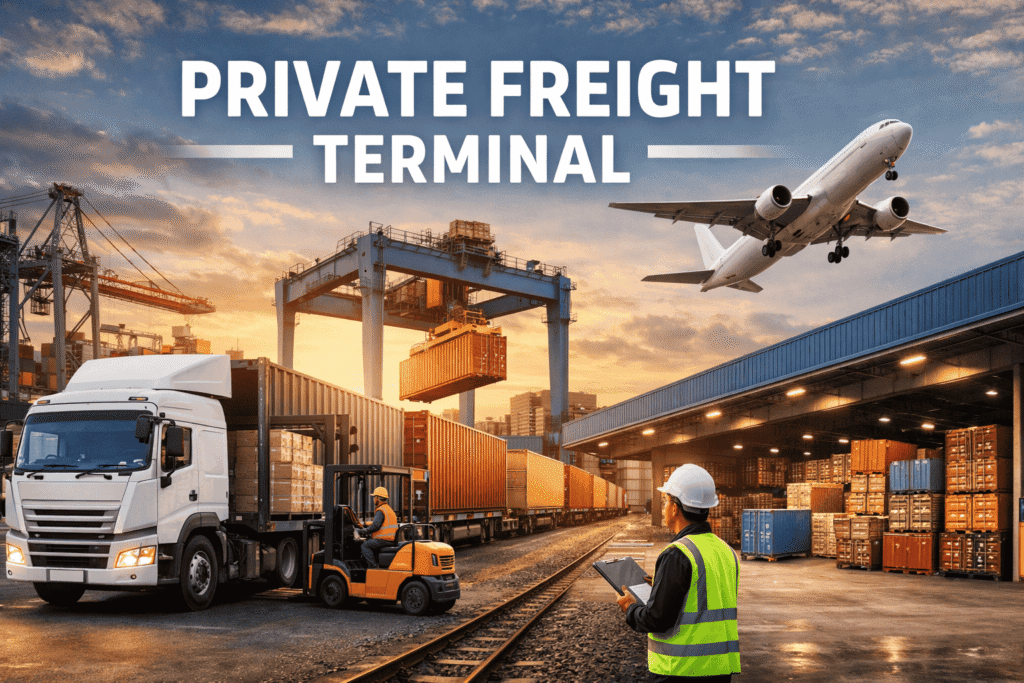

A private freight terminal is an essential part of cutting-edge logistics and deliver chain control. Many companies use private terminals to govern their items, lessen fees, and enhance transport speed.
In simple words, a non-public freight terminal is a facility owned or operated by a personal corporation where items are obtained, stored, looked after, and shipped. Unlike public terminals, those centers aren’t open to all of us. they are in particular utilized by unique agencies or contracted clients.
In this text, we will explain everything approximately a non-public freight terminal, inclusive of its which means, advantages, kinds, setup process, and comparison with public terminals.
What Is a Private Freight Terminal?
A private freight terminal is a transportation and logistics facility owned by a enterprise or a private organization. It’s miles used to control shipment, freight, and goods efficaciously.
Key Features
- Owned by way of a private organization
- Used for organisation-particular or gotten smaller shipments
- Gives managed get admission to
- Specializes in efficiency and velocity
- May consist of storage, loading docks, and delivery connections
These terminals can be related to:
- Road delivery (vans)
- Rail networks
- Seaports
- Airports
Why Businesses Use a Private Freight Terminal
Many agencies spend money on non-public freight terminals because they want more control over their supply chain.
Main Reasons
- Higher stock manage
- Faster loading and unloading
- Lower long-term transportation fees
- Reduced dependency on public centers
- Advanced safety
For massive manufacturers, stores, and logistics carriers, having a non-public facility can improve universal operations.
Types of Private Freight Terminals
A non-public freight terminal can be designed based totally at the sort of shipping and enterprise needs.
1. Road Freight Terminal
- Used in particular for truck transport
- Includes loading bays and parking area
- Perfect for domestic distribution
2. Rail Freight Terminal
- Linked without delay to railway strains
- Appropriate for bulk items
- Utilized by heavy industries
3. Port-Based Terminal
- Placed near or interior a seaport
- Handles import and export items
- Used by worldwide buyers
4. Air Cargo Terminal
- Positioned near airports
- Handles time-sensitive goods
- Used for excessive-price shipments
Each kind serves distinct industries and transportation desires.
Main Components of a Private Freight Terminal
A well-designed personal freight terminal usually includes the subsequent:
1. Loading and Unloading Area
- Docks for vans or packing containers
- System like forklifts and cranes
2. Storage Warehouse
- Brief storage for goods
- May also consist of temperature manipulate
3. Office and Control Room
- Administrative work
- Cargo tracking and documentation
4. Security Systems
- CCTV cameras
- Get admission to manage gates
- Defend services
5. Transportation Links
- Avenue get entry to
- Rail connection
- Port or airport connection
These kinds of additives work collectively to make certain easy cargo motion.
How to Set Up a Private Freight Terminal
Putting in a personal freight terminal requires proper planning and funding. Below are the primary steps:
Step 1: Identify Business Needs
- Form of goods
- Quantity of shipments
- Shipping mode required
Step 2: Choose the Right Location
- Close to highways, rail lines, ports, or airports
- Smooth get entry to for trucks
- To be had land vicinity
Step 3: Obtain Legal Approvals
- Government allows
- Environmental clearance
- Protection compliance
Step 4: Design Infrastructure
- Warehouse format
- Dock planning
- Safety structures
Step 5: Install Equipment
- Forklifts
- Conveyor structures
- IT tracking systems
Step 6: Hire Skilled Staff
- Logistics managers
- Warehouse people
- Security group of workers
Right making plans reduces future operational issues.
Private Freight Terminal vs Public Freight Terminal
Know-how the distinction among private and public terminals facilitates corporations pick the proper alternative.
| Feature | Private Freight Terminal | Public Freight Terminal |
|---|---|---|
| Ownership | Private company | Government or public authority |
| Access | Limited to owner or clients | Open to multiple businesses |
| Control | High level of control | Shared control |
| Cost | High initial investment | Pay-per-use model |
| Security | Higher and customized | Standard security |
| Flexibility | More flexible operations | Limited flexibility |
Private terminals are best for huge corporations with excessive shipment quantity, while public terminals suit smaller businesses.
Benefits of a Private Freight Terminal
Here are the main advantages:
1. Operational Efficiency
- Faster loading and unloading
- Much less waiting time
- Better scheduling
2. Cost Savings (Long Term)
- Reduced condo charges
- Lower shipping delays
- Bulk managing blessings
3. Improved Security
- Managed access
- Decreased cargo robbery risk
4. Better Inventory Management
- Actual-time tracking
- Prepared storage device
Competitive Advantage
- Quicker deliveries
- Stronger supply chain reliability
For growing agencies, those advantages can lead to better earnings.
Challenges of Operating a Private Freight Terminal
At the same time as there are many blessings, there are also some challenges.
1. High Initial Investment
- Land buy
- Creation fees
- Equipment charges
2. Maintenance Costs
- Workforce salaries
- System repairs
- Security management
3. Regulatory Compliance
- Environmental regulations
- Safety requirements
- Customs rules (for global change)
Companies should cautiously calculate expenses earlier than making an funding.
Industries That Use Private Freight Terminals
Many industries rely on personal freight terminals.
Examples:
- Manufacturing organizations
- Retail distribution facilities
- E-commerce corporations
- Oil and gas enterprise
- Automobile industry
- Agricultural exporters
Large corporations frequently build their own terminal to control bulk shipments.
Technology in Modern Private Freight Terminals
These days, technology performs a first-rate role in logistics.
Common Technologies Used:
- Warehouse control structures (WMS)
- Barcode scanning
- RFID monitoring
- Automated loading systems
- Real-time cargo monitoring
These technologies improve accuracy and decrease human errors.
FAQs
1. What is a private freight terminal?
A personal freight terminal is a shipment handling facility owned via a personal company for handling items and shipments.
2. Who can use a private freight terminal?
Typically, best the owner agency or its gotten smaller partners can use it.
3. Is a private freight terminal expensive?
Sure, it calls for excessive initial funding, however it can reduce charges inside the long time.
4. What types of goods can be handled?
Almost all sorts, along with:
- Bulk goods
- Container shipment
- Perishable goods
- Commercial materials
5. Is it better than a public terminal?
It depends on business length and load extent. huge agencies benefit greater from private terminals.
Conclusion
A personal freight terminal is a powerful solution for agencies that need more control over their logistics operations. It facilitates enhance efficiency, beautify protection, and decrease lengthy-term fees.
Although the initial investment can be excessive, many massive agencies locate it beneficial for handling huge cargo volumes. Via deciding on the right vicinity, the usage of current era, and making plans cautiously, companies can create a sturdy and dependable logistics device.
If your company handles full-size cargo frequently, investing in a personal freight terminal can be a smart and strategic decision for long-time period growth.